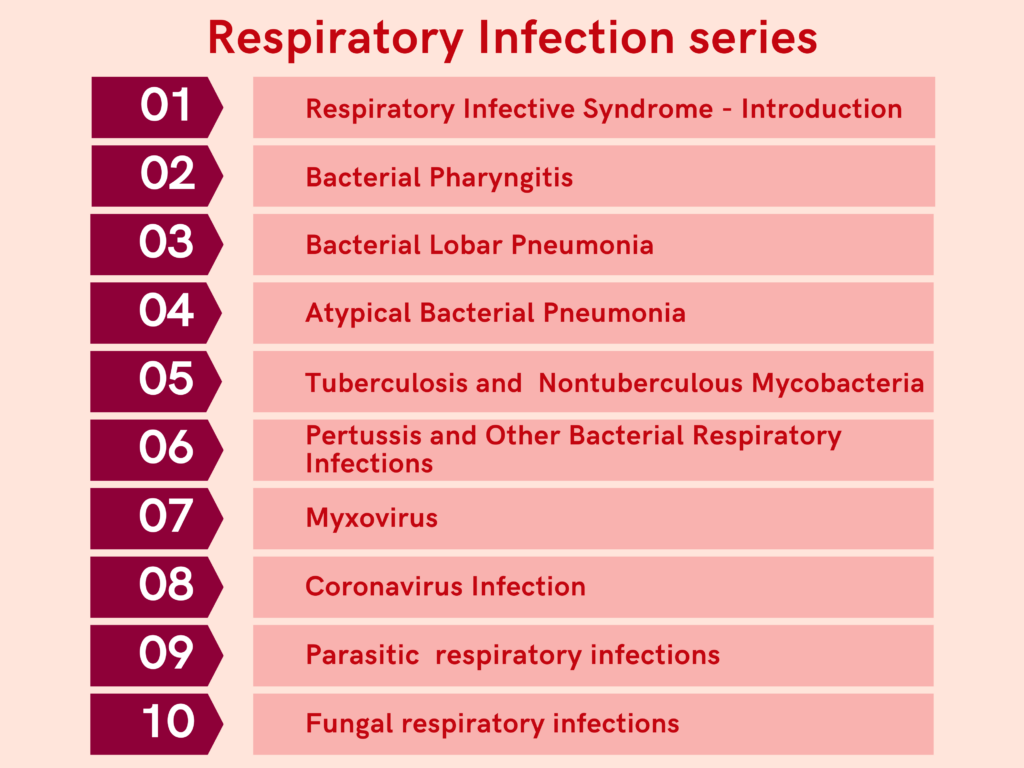
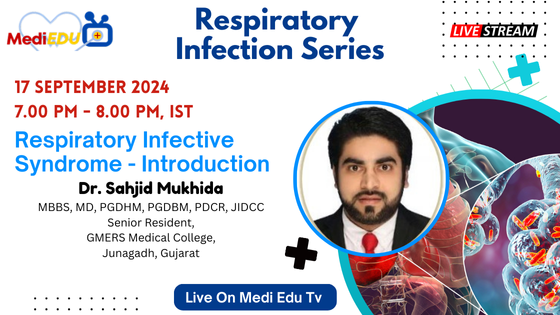
Respiratory Infection Series, Lecture-1: Respiratory Infective Syndrome - Introduction by Dr. Sahjid Mukhida
This session will provide an overview of Respiratory Infective Syndrome, focusing on the clinical presentation, pathophysiology, and diagnostic approach. Students will learn about the common pathogens involved, typical symptoms, and the importance of early diagnosis. The session will also cover treatment options, including antimicrobial therapies and supportive care.
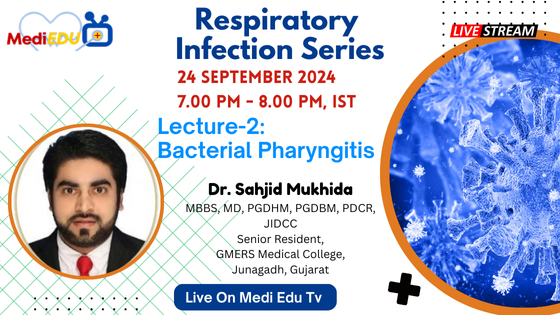
Respiratory Infection Series, Lecture-2: Bacterial Pharyngitis by Dr. Sahjid Mukhida
This session will provide an overview of bacterial pharyngitis, focusing on its etiology, clinical presentation, and management. Students will learn to differentiate bacterial from viral causes of pharyngitis. The session will cover diagnostic approaches, including clinical scoring systems and rapid antigen detection tests, as well as the appropriate use of antibiotics to prevent complications.
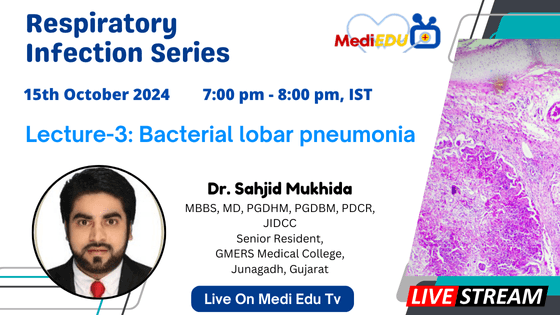
Respiratory Infection Series, Lecture-3: Bacterial lobar pneumonia by Dr. Sahjid Mukhida
This session will cover the pathophysiology, clinical presentation (fever, cough, chest pain, and difficulty breathing), diagnosis (chest X-ray, sputum cultures, and blood tests), and treatment options including antibiotics and supportive care. It will also discuss complications such as pleural effusion and respiratory failure. Understanding early diagnosis and effective treatment strategies
Respiratory Infection Series, Lecture-4: Atypical Bacterial Pneumonia by Dr. Sahjid Mukhida
The lecture will help UG medical students recognize atypical presentations of pneumonia, understand differences in pathogens and treatments, and improve diagnostic and clinical decision-making skills. Students will also learn about antimicrobial resistance and apply knowledge to real-world scenarios. This will enhance their ability to manage pneumonia cases effectively.
Respiratory Infection Series, Lecture-5: Tuberculosis (TB) and nontuberculous mycobacteria (NTM) infections by Dr. Sahjid Mukhida
This session will highlight the clinical implications of TB and NTM infections, with a focus on their differing transmission patterns, diagnostic challenges, and treatment strategies. TB, a major contagious disease, poses public health challenges due to its resistance patterns, while NTM, typically non-contagious, mainly affects immunocompromised individuals.
Respiratory Infection Series, Lecture-6: Pertussis and other bacterial respiratory infections by Dr. Sahjid Mukhida
This session will explore the clinical implications of pertussis and various bacterial respiratory infections, emphasizing their pathophysiology, transmission, and prevention strategies. Students will learn about the clinical presentation of pertussis, including its distinctive cough and potential complications, as well as the role of vaccination in reducing incidence. The discussion will also cover the diagnosis and management
Respiratory Infection Series, Lecture-7: Myxovirus by Dr. Sahjid Mukhida
This session focuses on the biology, pathogenesis, and clinical features of myxovirus infections. It covers diagnostic techniques, prevention strategies (including vaccination and hygiene), and current treatment options, emphasizing the significance of emerging strains and pandemics. By understanding myxovirus infections, students will gain a solid foundation for recognizing, diagnosing
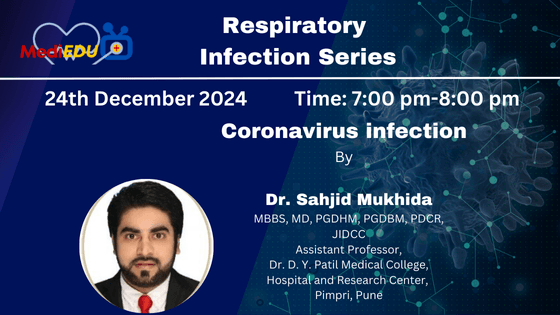
Respiratory Infection Series, Coronavirus infection by Dr. Sahjid Mukhida
This session will provide an overview of coronavirus infections, with a focus on SARS-CoV-2, including its structure, transmission dynamics, and clinical manifestations. Students will gain insights into diagnostic approaches, treatment strategies, and preventive measures such as vaccination and public health interventions. The session will emphasize the importance of recognizing early symptoms